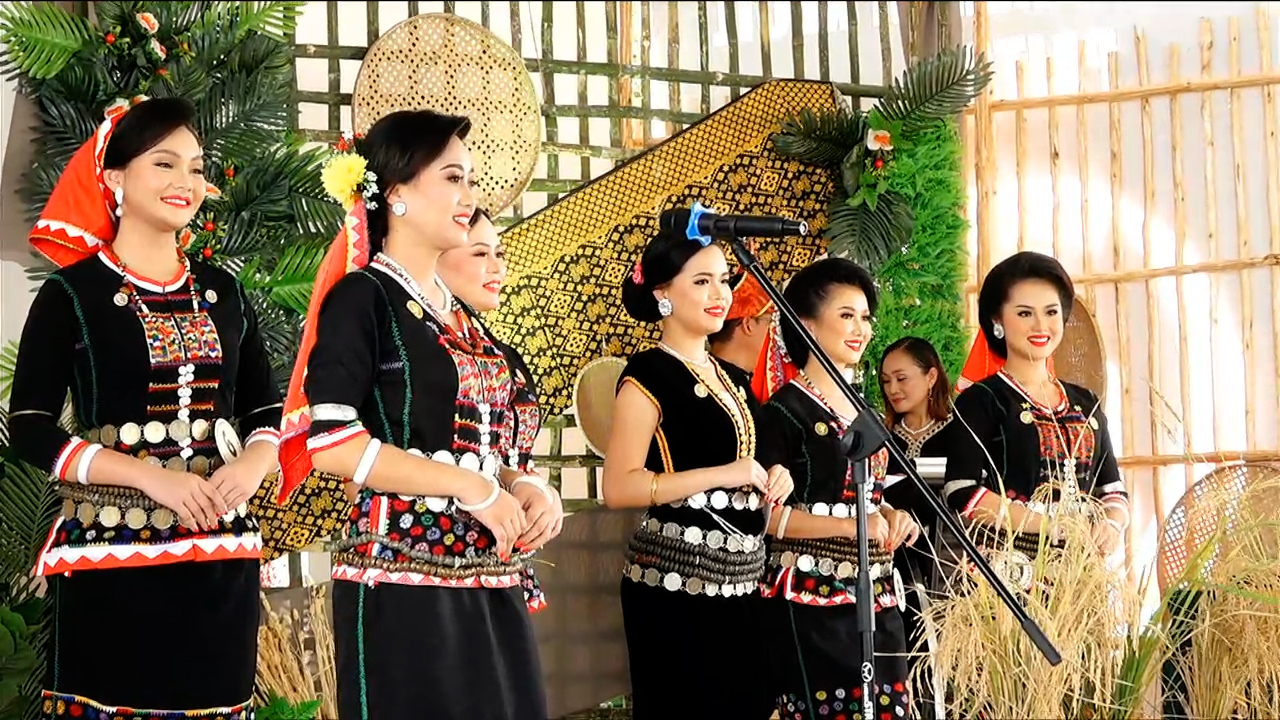
Momogun College exists to address the urgent, interlinked challenges Sabah’s indigenous communities face in the digital era: the loss of linguistic diversity, erosion of cultural heritage, persistent social exclusion, and lack of equitable access to quality education. Our purpose is not only to close the educational divide between rural and urban Sabah, but to transform digital learning into a catalyst for the revival and flourishing of local identities and collective resilience.
Sabah’s “Momogun” people-drawn primarily from the Dusun, Murut, Rungus, Paitan, and countless sub-ethnic groups-have for generations sustained intricate systems of belief, art, and community governance. Yet, these communities grapple with rising language endangerment, limited representation in mainstream policy and curriculum, and the risk of being sidelined in Malaysia’s digital transformation agenda.
Through accessible online programs and collaborative digital initiatives, Momogun College seeks to:
- Preserve endangered languages by developing online language resources and courses accessible across digital devices.
- Revitalize storytelling, song, dance, and local custom through digital archives, community-driven content creation, and virtual heritage festivals.
- Break down educational barriers for rural and marginalized youth, enabling them to pursue higher learning from their own villages or towns.
- Support the state’s ambition of eradicating generational poverty and uplifting community economies, as underscored by the Sabah Maju Jaya Roadmap and Sabah’s digital education reforms.
- Empower learners to become guardians, transmitters, and innovators of indigenous culture and wisdom, while cultivating the skills needed for professional, entrepreneurial, and academic success in the modern world.
Momogun College stands as a bridge-linking Sabah’s storied past to its digital future, ensuring no voice is left behind, and every community thrives on its own terms.
Why Momogun College Matters:
Empowering Sabah’s 49 Ethnic Groups
The Reality of Diversity in Sabah: A Mosaic at Risk
Sabah, known as the “Land Below the Wind,” is home to one of the world’s most complex and vibrant tapestries of ethnic, linguistic, and cultural identities. Estimates range from 33 to at least 49 distinct ethnic groups, further divided into over 200 sub-ethnic communities, each contributing unique languages, spiritual beliefs, artistic traditions, and worldviews to the state’s collective heritage.
- The Kadazan-Dusun and its more than 40 subgroups represent the largest cultural bloc-renowned for rice cultivation, the Kaamatan harvest festival, and the Sumazau dance.
- The Murut and Rungus communities are guardians of distinctive oral traditions and longhouse-based societies.
- The Tangga, Tatana, Tidung, Tobilung, Tindal, Bisaya, Lotud, Kimaragang, Orang Sungai, and many others, each maintain unique cultural knowledge, dialects, and rituals.
However, with less than five million speakers remaining for many indigenous tongues, and only a handful of native speakers for others, Sabah’s linguistic diversity stands on the brink of rapid decline in the face of globalizing pressures-the influx of mainstream media, urban migration, and educational frameworks that have historically marginalized local knowledge systems.
Indigenous Language Preservation: A Digital Lifeline
Momogun College is a direct response to the pressing threat of language extinction in Sabah’s indigenous communities. According to recent findings, more than 80% of Malaysia’s 137 languages are spoken by minorities, often lacking meaningful digital presence or support systems to ensure intergenerational transmission. Once lost, these languages-and the worldviews they encode-cannot be revived.
To counteract this, Momogun College:
- Integrates native language instruction into core and elective digital courses, enabling students to learn, research, and express themselves in Kadazandusun, Murut, Paitan, Rungus, and more.
- Supports community-driven projects for the creation of digital dictionaries, online Wikipedia articles, and story repositories in local languages, similar to recent initiatives that launched the Wikipedia Kadazandusun with over 900 articles and vibrant volunteer participation.
- Leverages digital storytelling, AI-assisted transcription, and user-friendly language learning apps-described in educational best practices-to engage both elders and youth in collaborative content creation, documentation, and cultural exchange.
- Partners with local language clubs, teacher trainees, and knowledge bearers to collectively archive and teach endangered dialects, thus making these resources accessible worldwide.
By embedding language preservation into everyday digital learning-not as a side project, but as the living core of its curriculum-Momogun College helps ensure the survival of the “soul” of each community, restoring pride and transmitting irreplaceable wisdom across generations.
Revitalizing Culture through Online Education
Culture is not merely preserved in museums or ritual, but by giving communities ownership over its expression, passing knowledge forward, and adapting to contemporary realities. Momogun College uses digital learning platforms as dynamic spaces for:
- Documenting and sharing oral traditions, songs, legends, and rituals: Community members can upload, curate, and disseminate their heritage at scale, driving both local engagement and global awareness.
- Virtual festivals, interactive classrooms, and augmented reality experiences: Students and elders can “meet” in digital longhouses, co-create e-portfolios of their traditions, and participate in pan-Sabahan heritage celebrations online-even from remote villages.
- Cross-community learning: The platform enables inter-ethnic dialogue, mutual appreciation, and understanding-strengthening social cohesion while celebrating diversity.
- Practical skills fusion: Students acquire modern digital literacy, entrepreneurship, and language skills contextualized within indigenous culture (e.g., learning programming through local folklore themes, or mapping ancestral lands with digital tools).
Crucially, Momogun College’s pedagogical model draws on indigenous, holistic learning traditions-such as storytelling, experiential projects, collective reflection, and ethnic knowledge systems-not simply “bolting on” technology, but creating a genuinely bicultural and community-driven academic environment.
Inclusive Education: Leaving No One Behind
Sabah faces some of the starkest disparities in Malaysia regarding education. Studies and government reports reveal the following:
- Persistent rural-urban digital divides-many interior communities lack reliable internet access or digital equipment, hampering both formal and lifelong learning.
- High rates of out-of-school children, often correlated with poverty, remote geography, language barriers, and social exclusion.
- Underrepresentation of indigenous values and history in the national curriculum, further fueling generational detachment from heritage.
Momogun College’s online-first, community-fueled model directly tackles these gaps by:
- Delivering content through mobile-friendly, low-data platforms, making it accessible even where infrastructure is limited. Distributed tablets and localized digital textbooks democratize access to rural students in partnership with government and private organizations.
- Providing all curriculum and support in multiple mother tongues, thus embracing multilingualism rather than requiring assimilation into a single “national” language.
- Adopting flexible learning models: Synchronous and asynchronous courses allow students to study at their own pace, regardless of work or family commitments.
- Promoting equity: Scholarships, peer mentoring, and community facilitators help B40 (bottom 40% income group) families, single mothers, and indigenous learners overcome historic barriers to tertiary education.
This approach is informed by cutting-edge global research and case studies-such as OECD recommendations and successful models at Northern New Mexico College-demonstrating that belonging, well-being, and culturally rooted instruction measurably improve both educational outcomes and community resilience.
Multilingual Learning and Heritage-Rooted Academic Excellence
A cornerstone of Momogun College is multilingual education for academic and cultural empowerment. International research consistently highlights that students thrive when they can learn, discuss, and be assessed in their first languages, which deepens comprehension and fosters a strong sense of identity.
At Momogun College:
- Courses are offered in Bahasa Malaysia, English, and major indigenous languages. Instructors and learners are encouraged to code-switch and use digital storytelling, fostering a linguistically inclusive and dynamic classroom.
- Curricula are informed by best practices in heritage-rooted instruction-mixed-mode learning with digital storytelling, project-based community research, peer-led workshops, and engagement with elders.
- Academic standards reflect both local and international benchmarks, blending rigorous research, technological fluency, and deep appreciation for indigenous knowledge systems (e.g., agriculture, resource management, governance, ecology, and arts).
- Assessment is flexible and adaptive, valuing community projects, oral traditions, and practical impact alongside traditional essays and exams.
The result is a new “Sabahan academic paradigm,” where excellence is defined as the full flourishing of both mind and culture, preparing students for professional success, leadership, and responsibility as heritage-bearers and future-makers.
Digital Empowerment and Community Impact
Momogun College’s mission reaches far beyond academic achievement-it is a project for community transformation. The college’s initiatives deliver:
- Digital skills for livelihood: Offering training in e-entrepreneurship, digital storytelling, content creation, and ICT support, Momogun graduates are equipped to build businesses, amplify their voices, and make their communities heard on a global stage.
- Platforms for youth activism and leadership: Indigenous learners curate cultural mini-documentaries, engage in digital advocacy for social and environmental justice, and build personal portfolios that open career pathways at home and abroad.
- Civic empowerment: By documenting land, traditional ecological knowledge, and customary law online, students and local leaders protect their communities’ rights and promote informed participation in national development conversations.
Momogun College’s transformative approach directly addresses calls by the Momogun National Congress, state leaders, and grassroots organizations to reposition indigenous peoples from “Lain-Lain” (“Others”) to recognized, respected, and proactive stewards of Sabah’s present and future.